


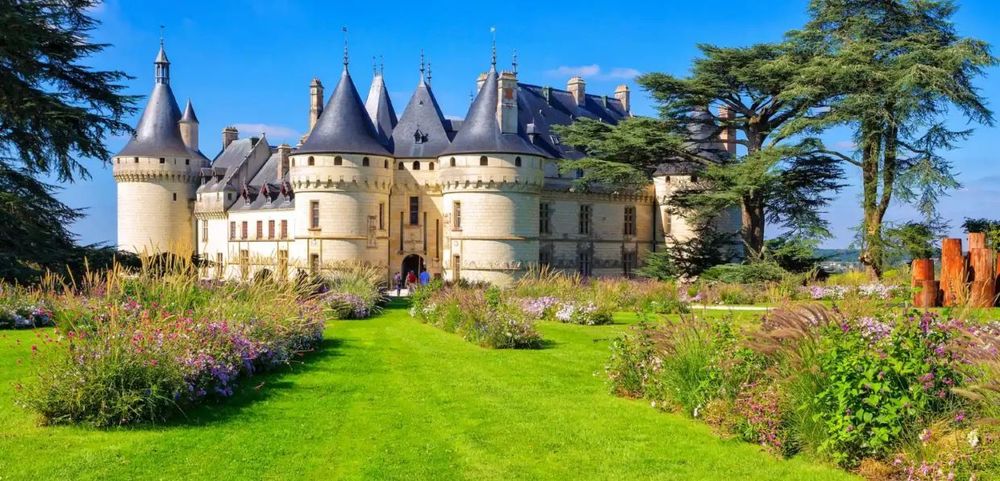
Tour of the castles of the Loire
5
Excursions to the regions of France
Duration
12 h
Group Size
Up to 7 people
Available
Daily
What is included in the price?
Licensed guide services
Transportation: Mercedes Classe V minivan with a license to transport passengers.
Mineral water
Chargers for iPhone and Android
What do you see on a tour of the Loire Valley castles?
The Château d'Amboise – the harmony of power and art
The Château d'Amboise – its silhouette is visible from afar: austere towers and ramparts. A harmonious blend of Gothic and Renaissance styles.
The castle reached its peak during the Renaissance, when the French kings made it not only one of their main residences but also the political center of France in the 16th century.
Francis I invited Leonardo da Vinci to the castle, where he spent the last years of his life. After his death in 1519, he was buried in the Chapel of Saint-Hubert on the castle grounds.
Chenonceau Castle - a castle that floats above the water
Chenonosseau is one of France's most graceful and romantic castles, seemingly floating above the waters of the Cher River. It's known as the "ladies' castle."
The castle's history is the story of strong women: Diane de Poitiers and Catherine de Medici. It was their taste and ambition that transformed the austere fortress into a refined Renaissance palace.
Here we'll talk not only about architecture, but also about love, jealousy, politics, and influence.
This is a castle you'll definitely remember: it has character.
Chambord Castle: a Renaissance symphony in stone
Chambord is unmistakable. It's vast, theatrical, and looks like the fantasy of an architect who decided to push the envelope. Towers and spires create a silhouette reminiscent of a fairytale city.
Inside is the famous double spiral staircase, often associated with the aforementioned Leonardo da Vinci. Chambord is astounding in its scale: 440 rooms, 365 fireplaces, and 80 staircases. Chambord was never permanently inhabited.
It was primarily used as a hunting lodge and a symbol of royal power. Surrounded by endless forest, hunting is still practiced there today.
Your Russian-speaking guide Garik Saakyan
Price
From a group of 1-3 people
€ 1000
From a group of 4-5 people
€ 1200
From a group of 6-7 people
€ 1400